Research updated August 4, 2026
Cheese looks simple until a restaurant starts buying it by the case. A mozzarella that stretches beautifully in a deck oven may brown too quickly in a conveyor oven. A premium cheddar can improve a burger, but an oversized case can erase the margin through spoilage. The manufacturer matters because it controls the recipe, cut, packaging, consistency and technical support behind every delivery.
This guide covers ten manufacturers with established foodservice capabilities in the United States. The companies range from large full-line dairy processors to specialists focused on pizza cheese, Italian varieties, cheddar, feta and custom customer-brand programs. We compare what each company makes, the foodservice formats it offers, where it performs best and the limitations restaurant buyers should understand before committing to a product.
Best overall: Saputo Dairy USA. Best branded and specialty portfolio: Lactalis Culinary. Best pizza mozzarella specialist: Leprino Foods. Best customer-brand partner: Schreiber Foods. Best for independent pizzerias: Grande Cheese. Best packaging and private-label specialist: Great Lakes Cheese. Best custom cut and innovation partner: Sargento Food Service & Ingredients. Best Italian specialty manufacturer: BelGioioso. Best branded cheddar program: Tillamook. Best feta and specialty portfolio: Emmi Roth.
1. What Makes a Strong Foodservice Cheese Manufacturer?
The best retail cheese brand is not automatically the best restaurant supplier. Foodservice cheese must survive receiving, cold storage, prep, portioning, cooking, hot holding and repeated service while producing the same result from one case to the next.
- Product performance: Melt, stretch, browning, oil release, shred separation, slice coverage and holding quality must match the restaurant’s equipment and recipes.
- Foodservice formats: Useful manufacturers offer loaves, blocks, shreds, dice, slices, crumbles, pails, portion packs or custom cuts that reduce unnecessary prep.
- Consistency: National chains and high-volume independents need narrow performance tolerances. A cheese that changes between production lots creates recipe and training problems.
- Distribution and supply: A strong product is only useful when the distributor stocks it, substitutions are controlled and replacement cases can arrive on schedule.
- Portfolio depth: Some operators benefit from purchasing mozzarella, cheddar, Parmesan, feta and cream cheese from one supplier. Others need a specialist for one signature application.
- Operator support: Test kitchens, samples, menu development, product specifications, yield testing and culinary support can prevent expensive purchasing mistakes.
- Usable cost: Buyers should calculate cost per serving after trim, brine, breakage, clumping, labour and waste rather than comparing invoice price alone.
2. How We Selected the Top 10
This is an editorial foodservice ranking, not a financial ranking, plant audit or controlled sensory panel. The order reflects how useful each manufacturer is to U.S. restaurant and institutional buyers based on official company information available when this guide was written.
- Depth of dedicated foodservice products and support
- Breadth of cheese categories and foodservice formats
- Ability to serve independent operators, chains, distributors or non-commercial accounts
- Manufacturing scale, consistency and supply capabilities
- Strength in a specific restaurant application, such as pizza, burgers or specialty cheese
- Availability of product specifications, samples, culinary guidance and custom solutions
Production volume alone did not determine the ranking. A large industrial cheese producer may have limited operator-facing information, while a smaller specialist may deliver better products, formats and support for a specific restaurant segment. Each manufacturer therefore received a defined role instead of an artificial one-to-ten taste score.
3. Top 10 Manufacturers at a Glance
| Rank | Manufacturer | Best use | Core foodservice strength |
|---|---|---|---|
| 1 | Saputo Dairy USA | Best overall full-line supplier | Mozzarella, cheddar, blue, goat, Italian, soft and hard cheeses |
| 2 | Lactalis Culinary | Best branded and specialty portfolio | Pizza cheese, feta, Brie, goat, spreads, PDO and imported cheeses |
| 3 | Leprino Foods | Best pizza mozzarella specialist | Mozzarella, pizza cheese, provolone, blends and engineered formats |
| 4 | Schreiber Foods | Best customer-brand partner | Natural, process and cream cheese for chains, distributors and manufacturers |
| 5 | Grande Cheese Company | Best for independent pizzerias | Premium mozzarella, ricotta, provolone, blends and aged Italian cheese |
| 6 | Great Lakes Cheese | Best packaging and private-label specialist | Natural and process cheese in extensive shred, slice and loaf formats |
| 7 | Sargento Food Service & Ingredients | Best custom cut and innovation partner | Broad natural cheese selection, custom cuts, portions and prepared cheese items |
| 8 | BelGioioso Cheese | Best Italian specialty manufacturer | Fresh mozzarella, Parmesan, Asiago, Gorgonzola, burrata and blends |
| 9 | Tillamook | Best branded cheddar program | Cheddar, Jack and Swiss in blocks, chunks, shreds, slices and portions |
| 10 | Emmi Roth | Best feta and specialty portfolio | Athenos feta, Roth specialty cheese, Swiss imports and artisan brands |
The ranking is based on foodservice usefulness, portfolio, formats, support and specialization—not solely on company revenue or total cheese output.
4. In-Depth Manufacturer Reviews
1. Saputo Dairy USA - Best Overall Full-Line Manufacturer

Saputo ranks first because it gives restaurant buyers the broadest practical combination of scale, category coverage and operator-facing support. Its U.S. foodservice portfolio spans mozzarella, cheddar, hard cheese, blue-veined cheese, goat cheese, soft cheese, cheese blends and cultured dairy products. The company also markets more than 30 foodservice cheese brands and produces customer-brand products. [1] [2] [3]
The portfolio includes pizza-focused lines such as Saputo® Premium Gold and Lugano®, Italian brands such as Stella®, blue cheese under Treasure Cave®, goat cheese under Montchevre® and a long list of regional and specialty labels. Saputo also operates a Product Performance Center with commercial kitchen equipment and multiple pizza ovens to test how products behave under real foodservice conditions. [4]
Key Foodservice Features
- One of the broadest foodservice cheese portfolios in the country.
- Strong mozzarella, blue cheese, goat cheese, cheddar, Italian and specialty programs.
- Loaves, blocks, shreds, feather shreds, dice, crumbles, wheels and other bulk formats.
- Operator solutions for pizza, burgers, sandwiches, salads, pasta and custom manufacturing.
- Own brands, customer brands, industrial ingredients and contract manufacturing capabilities.
Why It Works in a Restaurant
Saputo can cover most of a restaurant group’s cheese needs without forcing purchasing to build a separate supplier relationship for every category. A pizza concept can buy performance mozzarella, a salad chain can source blue and goat crumbles, and a full-service restaurant can add Parmesan, ricotta, feta or specialty cheese from the same manufacturer.
The company’s test-kitchen capabilities also matter. Cheese specifications look useful on paper, but ovens, hold times and recipes expose differences that a standard product sheet cannot show. Saputo’s ability to test products in commercial conditions gives larger operators a stronger path from sample to system-wide rollout.
Potential Drawbacks
The catalogue is large enough to become confusing. Similar cheeses appear under several brands, cuts and case formats, so operators must confirm the exact item code rather than ordering by a general product name.
Saputo’s premium lines can also carry a higher delivered cost than commodity alternatives. Restaurants should compare the premium against melt coverage, portion size, labour savings and menu positioning rather than assuming the least expensive mozzarella or cheddar is the best value.
Best For: Multi-unit restaurants, broadline distributors, hotels, institutions and independent operators that want one manufacturer to cover several cheese categories.
2. Lactalis Culinary - Best Branded and Specialty Portfolio
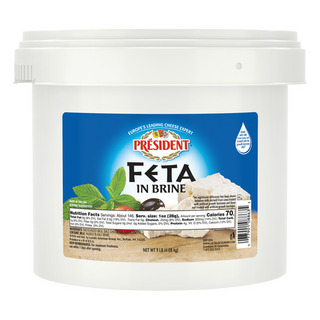
Lactalis Culinary brings restaurant operators an unusually deep mix of domestic, imported and protected-origin cheeses. The division supports independent operators and national chains with brands including Galbani®, Président®, Valbreso®, Société®, Kraft® and several European specialty labels. Lactalis describes its global portfolio as one of the broadest in the industry and backs it with culinary, sales and marketing professionals. [5] [6]
The company’s foodservice range covers mozzarella, ricotta, mascarpone, Parmesan, Romano, feta, Brie, goat cheese, blue cheese, spreadable cheese, Spanish cheese, Swiss-style cheese and chef-ready blends. This allows a buyer to source high-volume pizza cheese and premium board cheese through the same organization.
Key Foodservice Features
- Major foodservice brands with strong consumer recognition.
- Domestic workhorse cheeses and imported specialty or PDO products.
- Extensive Italian portfolio through Galbani®, including mozzarella, ricotta and aged cheeses.
- Président® feta, Brie, goat cheese, spreadable cheese and portion-controlled formats.
- Culinary support, menu concepts, pairing guidance and product selection assistance.
Why It Works in a Restaurant
Lactalis works when a restaurant wants both operational cheese and a visible menu story. Galbani mozzarella can anchor pizza and pasta, while Président Brie, Valbreso sheep’s-milk cheese or Société Roquefort can support a premium appetizer or cheese board. Buyers do not have to choose between scale and specialty.
Brand recognition can also help menu communication. A restaurant may be able to name Président, Galbani or another recognized label when the product has enough guest value to justify the claim. That matters on premium burgers, cheese boards, Italian dishes and Mediterranean menus.
Potential Drawbacks
Imported and specialty products do not always move through the same distributor network as domestic cheese. A restaurant may find the brand nationally but still face regional stocking gaps, special-order requirements or longer lead times for a specific SKU.
The range also spans very different price levels. Purchasing teams should separate everyday cheese, signature cheese and garnish cheese instead of applying premium products everywhere and allowing a strong brand to quietly weaken food cost.
Best For: Restaurants that need a broad branded portfolio, imported specialty cheese, Italian applications, cheese boards and premium menu differentiation.
3. Leprino Foods - Best Pizza Mozzarella Specialist
Browse Leprino Foods products on Foodservicer
Leprino is the specialist on this list. The Denver-based company concentrates on mozzarella, pizza cheese, provolone and blends built for pizza, foodservice and food manufacturing. Its portfolio is designed around the variables that determine pizza performance: melt, stretch, browning, coverage, portioning and repeatability. [7]
Available forms include 6 lb loaves, 20 lb blocks, ribbon cheese, shreds, dice, string cheese and individually quick-frozen Quality-Locked® Cheese. Leprino also offers Precision Melt™ products developed for enclosed applications such as stuffed crusts, calzones and filled bakery items. [7] [8] [9]
Key Foodservice Features
- Deep specialization in mozzarella and pizza cheese performance.
- Loaf, block, shred, dice, ribbon, string and IQF formats.
- Pizza cheese, provolone, blends and controlled-melt solutions.
- Consistent cut quality and ready-to-use products that reduce prep labour.
- Products for restaurants, pizzerias, food manufacturers and cheese converters.
Why It Works in a Restaurant
Leprino is built for operations where cheese behavior is part of the production system. A large pizza chain cannot tolerate one batch blistering differently from another or a shred that covers the pie unevenly. The company’s narrow focus and technical formats address that problem directly.
The format range also lets operators choose where labour should occur. A traditional pizzeria can shred a 6 lb loaf in-house. A chain can use calibrated shreds or dice for faster portioning. A frozen-food producer can use ribbon or IQF cheese to fit automated production.
Potential Drawbacks
The strength is also the limitation. Leprino is not the supplier for a broad cheddar, blue, goat, feta or artisan cheese program. Restaurants that choose Leprino for pizza will usually need other manufacturers for the rest of the menu.
Smaller independents may also encounter Leprino through a distributor rather than a direct manufacturer relationship. They should confirm which recipe, cut and pack their distributor stocks because the Leprino name alone does not identify the product’s exact oven performance.
Best For: Pizza chains, high-volume pizzerias, frozen-food manufacturers, commissaries and operators that treat mozzarella performance as a critical production specification.
4. Schreiber Foods - Best Customer-Brand and Large-Chain Partner

Schreiber Foods operates differently from a consumer-facing cheese brand. It is a customer-brand leader that supplies natural cheese, process cheese and cream cheese to restaurants, retailers, distributors and food manufacturers. The company reports more than $7 billion in annual sales, more than 10,000 employees and a presence on five continents. [10] [11]
Its cheese capabilities include hard, semi-hard, semi-soft, soft and fresh natural cheeses, process cheese for burgers and sauces, and cream cheese in numerous sizes and flavours. Schreiber also provides value-added services such as culinary expertise, consumer insights, risk management and product development. [11] [12]
Key Foodservice Features
- Natural, process and cream cheese capabilities.
- Customer-brand programs for restaurants, distributors, retailers and manufacturers.
- Large-scale operations suited to national and international customers.
- Process cheese with predictable melt and holding performance.
- Culinary, commercial and technical services beyond manufacturing.
Why It Works in a Restaurant
Schreiber works best behind the scenes. A national burger chain may need a proprietary slice with a specific melt, colour, salt level, hold time and wrapper. A breakfast chain may need cream cheese in a controlled portion. A distributor may need cheese under its own label. These are customer specifications, not ordinary catalogue purchases.
The company’s scale and service model make it a serious option when cheese must be integrated into procurement, quality assurance, logistics and product development. The relationship extends beyond selecting a flavour from a product list.
Potential Drawbacks
Independent restaurants looking for a visible premium brand or a small-case specialty cheese may find Schreiber less accessible than an operator-facing manufacturer. Its value is strongest when the customer has meaningful volume, defined specifications or a private-label need.
Because much of the business is customer-brand, restaurant guests may never see the Schreiber name. That is an advantage for proprietary programs but offers little marketing value to operators who want a recognized cheese brand on the menu.
Best For: National chains, broadline distributors, convenience foodservice, institutional programs and food manufacturers requiring custom or customer-brand cheese.
5. Grande Cheese Company - Best for Independent Pizzerias
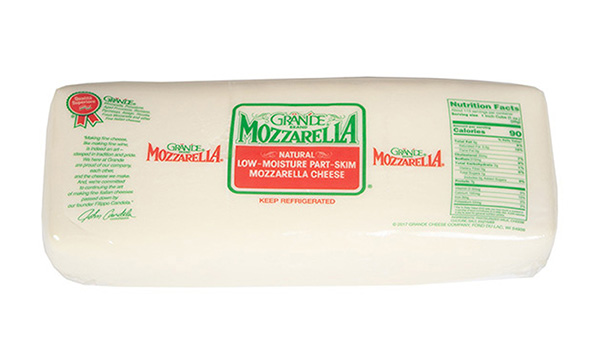
Grande is the clearest specialist for independent pizzerias and Italian restaurants. The Wisconsin manufacturer focuses on foodservice rather than retail and says it exclusively crafts Italian cheeses for independent operators. Its history dates to 1941, when Filippo Candela and his partners established the company around premium Italian cheesemaking. [13] [14]
The range includes whole-milk and part-skim mozzarella, East Coast Blend, smoked mozzarella, provolone, ricotta, burrata, fresh mozzarella, Parmesan, Romano, Asiago and other Italian cheeses. Grande also supports operators through tastings, training, cost tools, portion-control resources and its 100-Percenter Program®. [13] [15]
Key Foodservice Features
- Premium mozzarella developed around pizza performance and flavour.
- Complete Italian line including ricotta, provolone, fresh and aged cheeses.
- Loaves, shreds, dice, sliced formats, tubs and bulk bags.
- Dedicated sales and culinary support for independent pizzerias.
- All-natural positioning with no fillers, artificial ingredients or preservatives in its cheese line.
Why It Works in a Restaurant
Grande understands the independent pizzeria as a business, not simply as a cheese account. Its support covers portion control, menu development, marketing and pizza operations. That gives an owner more value than a case of mozzarella alone.
The portfolio also allows an Italian restaurant to keep one quality level across the menu. Mozzarella can lead the pizza program while Grande ricotta, provolone, burrata and aged cheeses carry the same positioning into pasta, sandwiches, appetizers and catering.
Potential Drawbacks
Grande is usually purchased as a premium product, so it must earn its cost through flavour, yield, consistency, menu price or customer loyalty. It is not designed to win a commodity bid based only on the lowest price per pound.
The company’s focus on independent pizzerias is another boundary. A burger chain, school system or operator that needs broad cheddar, process cheese and portion packs may find a full-line supplier more practical.
Best For: Independent pizzerias, Italian restaurants and chef-led pizza concepts that use cheese quality as a central part of their identity.
6. Great Lakes Cheese - Best Packaging and Private-Label Specialist
Browse Great Lakes Cheese products on Foodservicer
Great Lakes Cheese combines manufacturing, conversion and packaging at national scale. The company describes itself as a leading natural cheese packager and produces natural and processed cheese in bulk, shredded and sliced formats. Its foodservice customers include non-commercial accounts, chain restaurants, convenience stores, independents and distributors. [16] [17]
Founded in 1958, Great Lakes Cheese has grown to nine plants across six states and remains privately owned by the Epprecht family and employee-owners. Its foodservice business includes Great Lakes Cheese and Empire Select™ products as well as distributor and customer-brand labels. [18]
Key Foodservice Features
- Natural and process cheese across a wide range of formats.
- Large selection of shreds, cuts, slices, loaves and packaging systems.
- Private-label and distributor-brand manufacturing.
- National production and distribution footprint.
- Customer collaboration for menu, flavour, formula and packaging development.
Why It Works in a Restaurant
Packaging is where Great Lakes becomes especially useful. The correct closure, bag size, slice count or loaf format can reduce drying, overportioning and discarded product. A small packaging change may save more money than a minor difference in cheese price.
The company also fits customers that want a cheese program under their own or their distributor’s brand. That makes it relevant to broadliners, contract feeders, chains and operators whose priority is specification control rather than a consumer-facing manufacturer name.
Potential Drawbacks
The product may appear under several labels, so the brand on the case does not always reveal who made or packed it. Buyers need the exact specification, not assumptions based on a distributor house brand.
Great Lakes is strongest in operational scale, packaging and private label. Restaurants seeking an imported PDO story, small artisan wheel or chef-recognized specialty brand may need a different supplier for those menu items.
Best For: Distributors, chain restaurants, convenience stores, institutions and operators that need private-label cheese, efficient packaging or multiple cuts and formats.
7. Sargento Food Service & Ingredients - Best Custom Cut and Innovation Partner
Browse Sargento Food Service products on Foodservicer
Sargento Food Service & Ingredients turns the company’s natural-cheese experience into a business-to-business program. It is part of the family-owned Sargento organization, which has operated since 1953, and supports customers with five facilities, licensed cheese graders, product development, sensory work, culinary support and packaging solutions. [19]
The cheese range covers American, Italian, Hispanic and specialty varieties. Available styles include cheddar, Colby, Jack, mozzarella, Parmesan, provolone, Romano, feta, blue, goat, Gouda, Gruyère, queso fresco and many blends. Cuts include slices, shreds, cubes, dice, crumbles, fresh grated cheese, specialty shapes and portion-controlled or bulk packages. [20]
Key Foodservice Features
- Broad natural-cheese selection across several cuisines.
- Custom cuts, shapes, blends and package sizes.
- Portion-control and bulk formats from small packs to foodservice bags.
- Mozzarella string cheese and prepared battered or breaded cheese items.
- R&D, sensory, culinary, marketing and consumer-insight support.
Why It Works in a Restaurant
Sargento is useful when the operator’s problem is more specific than choosing cheddar or mozzarella. A chain may need a slice with a particular visual footprint, a custom shred blend, an IQF cheese component or a prepared appetizer that removes several back-of-house steps.
The company’s cheese graders and development resources support customers who want to define flavour, texture and function before committing to a finished specification. That is valuable for chains, meal manufacturers and branded prepared-food programs.
Potential Drawbacks
The foodservice and ingredients business is solution-led rather than a simple public catalogue of nationally stocked SKUs. Many projects require a sales discussion, defined volume and development work before the exact product becomes clear.
Independent restaurants seeking an immediately available case through a local broadliner may find a standard distributor brand easier to source. Sargento’s strongest value appears when the customer can use its customization and technical support.
Best For: Restaurant chains, prepared-food manufacturers, convenience programs and operators that need custom cheese cuts, blends, portions or developed menu components.
8. BelGioioso Cheese - Best Italian Specialty Manufacturer
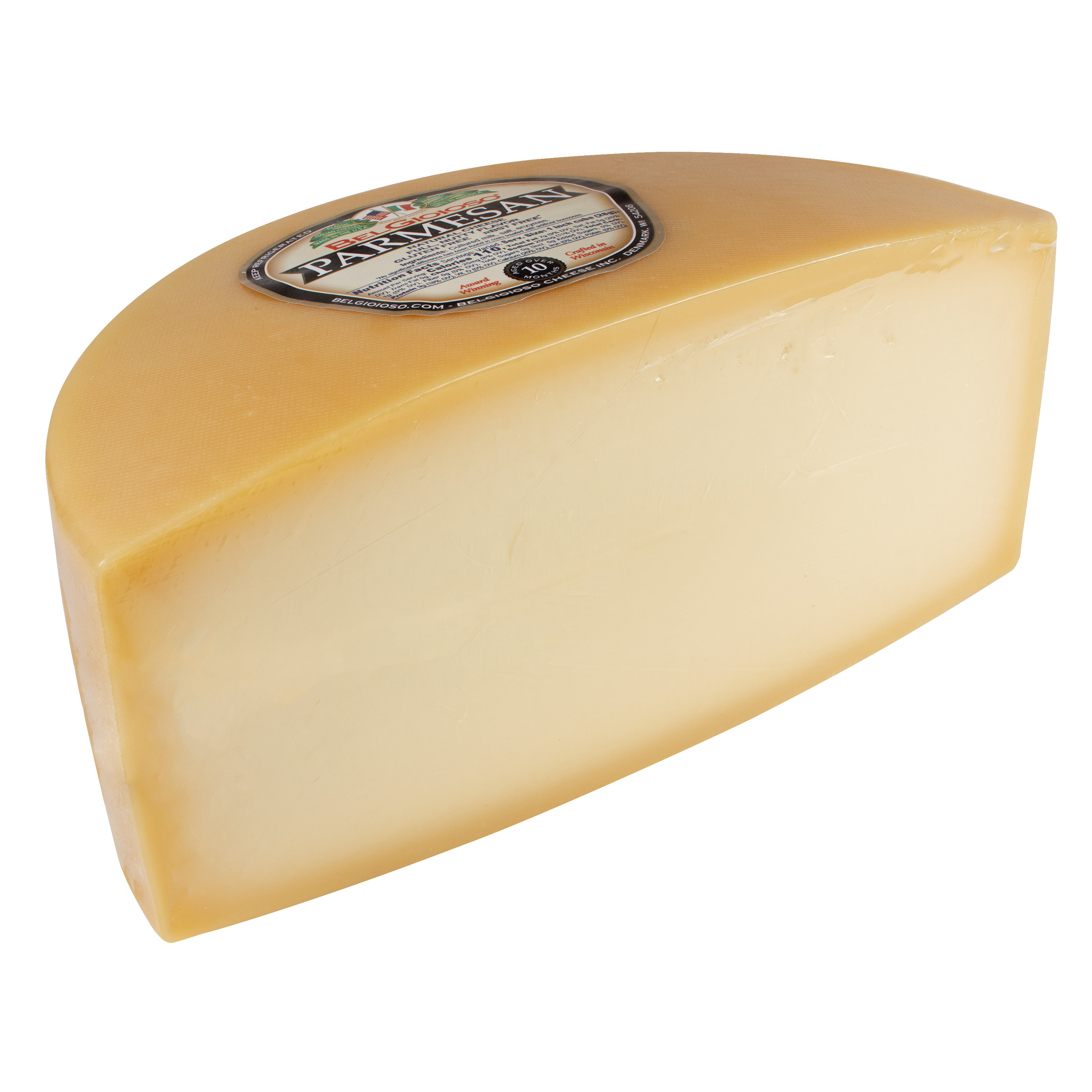
BelGioioso is one of the strongest choices when Italian cheese is a visible part of the menu. The company’s U.S. story began in 1979, when Errico Auricchio moved from Italy to Wisconsin to continue his family’s cheesemaking tradition. BelGioioso now produces more than 25 varieties of specialty cheese and offers a dedicated foodservice range. [21] [22]
The portfolio includes fresh mozzarella, burrata, Parmesan, Romano, Asiago, provolone, mascarpone, ricotta, Gorgonzola, blue cheese, artisan varieties, blends, pizza cheese and Hispanic cheese. Foodservice products include wheels, wedges, grated cheese, shredded blends, logs, slicing loaves, pre-sliced fresh mozzarella and portion-ready formats. [22] [23]
Key Foodservice Features
- Deep Italian specialty portfolio from fresh to aged cheese.
- Foodservice-specific fresh mozzarella logs, slices and loaves.
- Parmesan, Asiago, Gorgonzola, provolone, burrata and chef-ready blends.
- Multiple pack sizes and menu suggestions for operator use.
- Strong provenance through Wisconsin milk and Italian cheesemaking tradition.
Why It Works in a Restaurant
BelGioioso helps a restaurant create a more complete Italian cheese program. Fresh mozzarella can support Caprese, pizza and sandwiches; burrata can anchor an appetizer; Parmesan and Asiago can finish pasta; Gorgonzola can move across salads, sauces and steak applications.
Its foodservice packaging is equally important. Pre-sliced mozzarella and slicing loaves reduce preparation while preserving a more premium product identity than a generic shred. Operators can choose convenience without abandoning the cheese’s role on the menu.
Potential Drawbacks
Fresh specialty cheese requires tighter inventory control than long-life commodity cheese. Shorter shelf life, water-packed formats and delicate texture can increase waste when sales volume is inconsistent.
The portfolio also carries a premium position. Restaurants should reserve the most expensive varieties for applications where guests notice the flavour, texture or brand story instead of burying them inside heavily seasoned dishes.
Best For: Italian restaurants, hotels, caterers, chef-driven concepts and operations that need fresh mozzarella, burrata, aged Italian cheese and specialty menu appeal.
9. Tillamook County Creamery Association - Best Branded Cheddar Program
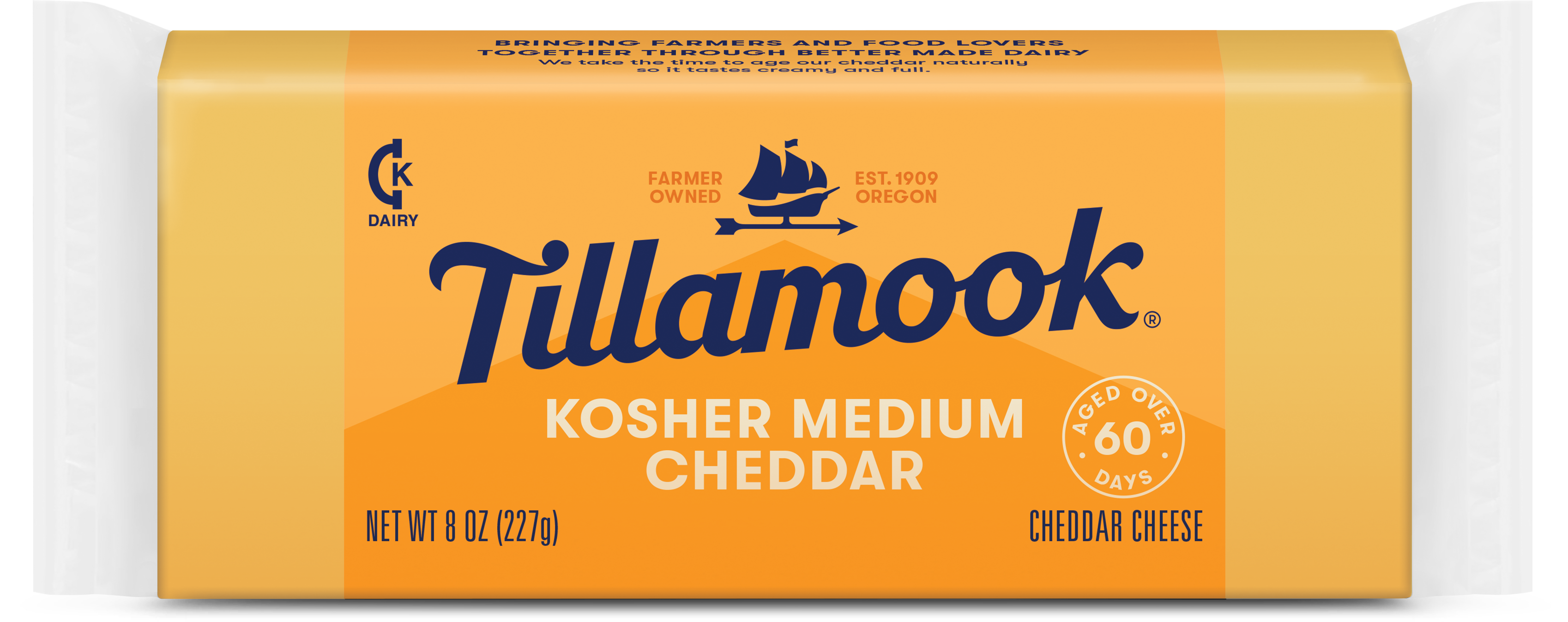
Tillamook gives restaurants a recognizable branded cheddar program backed by a dairy cooperative founded in 1909. Its foodservice cheese range includes cheddar, Jack and Swiss varieties in blocks, chunks, slices, shreds, snack portions and specialty aged formats. [24] [25]
The foodservice site presents multiple pack sizes, including 40 lb blocks, 2 lb to 10 lb chunks, 5 lb shred bags and pre-sliced sleeves. Tillamook also supports operators with menu insights, limited-time-offer ideation and consultation around branded applications. [24]
Key Foodservice Features
- Strong consumer recognition and menu-name value.
- Cheddar in medium, sharp, extra-sharp, white and flavoured varieties.
- Blocks, chunks, shreds, slices, portions and long-aged specialty cheese.
- Useful formats for burgers, sandwiches, macaroni and cheese, soups and bowls.
- Operator support built around menu trends and branded applications.
Why It Works in a Restaurant
Tillamook works when the cheese name contributes to the selling proposition. A restaurant can use the brand to distinguish a burger, grilled cheese, breakfast sandwich or macaroni and cheese instead of presenting cheddar as an invisible commodity.
The format range lets the operator choose between labour and control. Pre-sliced sleeves speed up the line. Five-pound shreds support hot applications. Larger chunks and blocks give kitchens flexibility for slicing, shredding and sauces.
Potential Drawbacks
Tillamook is not a full Italian, feta, blue or process-cheese supplier. Its strongest foodservice story remains cheddar and related everyday varieties, so most operators will need additional manufacturers for a complete cheese program.
A recognized premium brand can cost more than a private-label equivalent. The restaurant should use the name on the menu, test whether guests value it and make sure the portion delivers enough flavour to justify the premium.
Best For: Burger restaurants, sandwich concepts, gastropubs, breakfast operators and menus that can benefit from a recognizable premium cheddar brand.
10. Emmi Roth - Best Feta and Specialty Cheese Portfolio
Browse Emmi Roth products on Foodservicer
Emmi Roth combines domestic specialty cheesemaking, imported Swiss cheese and the Athenos feta business. Its roots trace to 1911, and the current company produces specialty cheese in Wisconsin while serving foodservice customers nationwide. The portfolio includes Athenos, Roth® Cheese, Emmi USA and Cowgirl Creamery. [26] [27]
The company has expanded its conversion capabilities through a Stoughton, Wisconsin facility that cups, bags, wedges, shreds and crumbles cheese. Its foodservice team supports custom cuts, shreds and blends, menu ideation and application guidance. In 2026, Emmi Roth highlighted foodservice products ranging from Athenos feta and whipped feta to Roth pepper Gouda, Swiss imports and artisan cheese. [28] [29]
Key Foodservice Features
- Athenos feta in blocks, crumbles, dips and spreadable formats.
- Roth Alpine-style, Havarti, Gouda, blue and washed-rind cheeses.
- Imported Swiss cheese through Emmi USA.
- Artisan and organic offerings through Cowgirl Creamery.
- Custom conversion, culinary support and specialty-menu development.
Why It Works in a Restaurant
Emmi Roth gives operators several levels of specialty cheese. Athenos can support high-volume salads, bowls and Mediterranean applications. Roth can add a premium domestic cheese to burgers, boards and sauces. Emmi imports and Cowgirl Creamery can serve menus where origin and artisan reputation justify a higher price.
The conversion facility also makes the portfolio more practical. Specialty cheese is easier to scale when the manufacturer can provide crumbles, shreds, cups, wedges and custom blends rather than forcing every restaurant to portion whole wheels.
Potential Drawbacks
Specialty portfolios require careful distribution planning. An operator may find Athenos broadly available while a particular Roth, Emmi or Cowgirl Creamery item requires a specialty distributor or longer lead time.
Premium cheese can also create hidden food-cost pressure. The best strategy is to identify the dishes where the cheese is visible and memorable, then use a more economical product for applications where other ingredients dominate.
Best For: Mediterranean restaurants, cheese-board programs, hotels, wine bars and chef-driven concepts that need feta, Swiss, Alpine-style, blue or artisan cheese.
5. National Full-Line Suppliers Versus Specialists
The largest manufacturer is not automatically the right manufacturer. The choice depends on whether the restaurant values consolidation or specialization.
Full-line manufacturers: Saputo and Lactalis can cover many categories through one organization. This simplifies vendor management and gives multi-concept groups more leverage, but the buyer must navigate large catalogues and identify the correct brand, formula and item code.
Technical and customer-brand manufacturers: Schreiber, Great Lakes Cheese and Sargento become stronger when the customer needs a defined specification, private label, custom package or product-development partnership. Their greatest value often appears at higher volumes.
Application specialists: Leprino and Grande focus intensely on pizza and Italian foodservice. They may not supply every cheese on the menu, but their knowledge of melt, stretch, reheat, dough interaction and pizzeria operations can justify a separate supplier relationship.
Specialty and branded manufacturers: BelGioioso, Tillamook and Emmi Roth help restaurants add recognizable brands, origin stories and differentiated flavours. These products work best when the guest can see, taste or identify the cheese.
6. Manufacturer, Brand and Distributor Are Not the Same Thing
Restaurants usually order cheese from a distributor, not directly from the plant. This creates three separate decisions: who manufactures the cheese, which brand or specification appears on the case, and which distributor can deliver it consistently.
- A manufacturer may sell the same cheese under its own brand, a distributor label or a restaurant customer brand.
- A brand owner may use several manufacturing facilities or recipes, so operators should buy by item code and specification rather than name alone.
- A broadline distributor may stock only a small portion of a manufacturer’s range. A product shown online is not necessarily available in every market.
- Special-order cheese can create long lead times, full-case minimums and substitution risk.
- For multi-unit operations, approved alternates should be tested before a shortage occurs.
The practical rule is simple: confirm the manufacturer, brand, item code, pack size, net product weight and substitution policy before a product enters the recipe system.
7. Cheese Performance, Yield and Food Cost
Price per pound is only the starting point. Cheese affects food cost through coverage, portion size, labour, trim, packaging and waste.
- Pizza: Measure ounces per pie, edge-to-edge coverage, browning, stretch, oil release and performance after delivery or reheating.
- Burgers and sandwiches: Compare slice weight, dimensions, peelability, melt speed and how well the cheese covers the protein.
- Salads and bowls: Evaluate crumble size, dust, clumping, moisture, portion-scoop consistency and flavour intensity.
- Sauces and dips: Test emulsification, graininess, separation and the amount of additional dairy needed to reach the desired texture.
- Brined cheese: Calculate cost from drained or net cheese weight, not only the gross pail weight.
- Fresh cheese: Include shorter shelf life and opened-package waste in the real cost.
- Premium cheese: Stronger flavour may allow a smaller portion, but only a plate test can confirm the saving.
A two-cent difference per ounce becomes meaningful at chain volume, but a cheaper product can cost more when it requires a heavier portion or creates excessive trim. Run the cheese on the actual equipment, plate it with the full recipe and measure the result before approving a switch.
8. Foodservice Formats That Reduce Labour
The correct format can remove more cost than a lower cheese price. Manufacturers now offer cuts and packages designed around specific stations and menu items.
- Loaves and blocks: Best when the kitchen wants maximum flexibility and can shred or slice efficiently.
- Pre-shredded and diced cheese: Saves labour and improves portion consistency, but anti-caking ingredients may affect some sauces or premium melt applications.
- Pre-sliced cheese: Speeds burgers and sandwiches while controlling slice weight and coverage.
- Crumbles: Useful for salads and bowls, but the operator should test dust, clumping and scoop accuracy.
- IQF and frozen formats: Improve separation and consistency for manufacturing, commissaries and high-volume operations.
- Portion cups and individually wrapped pieces: Reduce handling and support grab-and-go, healthcare and school foodservice.
- Custom blends: Combine flavour and functionality in one bag, reducing inventory and eliminating inconsistent in-house mixing.
9. Questions to Ask a Manufacturer or Distributor
- Which exact item code and recipe will be supplied to my market?
- Is the product regularly stocked, cross-docked or special order?
- What are the net product weight, drained weight and usable yield?
- Which pack sizes and cuts are available through my distributor?
- Does the product contain cellulose, starch, natamycin or other functional ingredients?
- What are the unopened shelf life and the manufacturer’s instructions after opening?
- Can the company provide nutrition, allergen, country-of-origin and specification documents?
- Can we test a sample in our oven, holding equipment and complete recipe?
- What alternate SKU is approved if the primary product is unavailable?
- Can the manufacturer support multiple locations with the same specification?
- Are kosher, halal, organic, vegetarian-rennet or other certifications available at the product level?
- What culinary, yield-testing, menu-development or training support is included?
10. Common Cheese Purchasing Mistakes
- Buying by brand name alone: Large manufacturers sell several formulas under related brands. The item code and specification determine performance.
- Choosing the lowest price per pound: A cheap cheese can require a larger portion, create more waste or perform poorly after holding.
- Using one cheese for every application: The best pizza mozzarella is not automatically the best cheese for a sauce, salad or sandwich.
- Ignoring format and labour: Hand-shredding may appear cheaper until prep time, injuries, inconsistency and trim are included.
- Buying an oversized case: A lower unit price becomes expensive when opened cheese dries out or spoils before use.
- Failing to test the actual equipment: Oven type, temperature, cook time and holding conditions can change the result completely.
- Assuming national availability: A manufacturer may operate nationally while a particular SKU remains regional or special order.
- Using premium cheese where guests cannot notice it: Reserve expensive products for dishes where flavour, origin or brand improves the selling proposition.
- Skipping an approved substitute: Supply disruptions become menu emergencies when no alternate product has been tested.
11. Final Verdict
Saputo Dairy USA is the best overall choice for operators that need broad category coverage, foodservice formats and national-scale support. Its combination of mozzarella, cheddar, blue, goat, Italian and specialty cheese makes it the most versatile manufacturer in this ranking.
Lactalis Culinary is the strongest alternative when brand recognition and imported specialty cheese matter. Leprino is the clear pizza-performance specialist. Schreiber is built for customer-brand and large-chain programs, while Grande delivers the most focused support for independent pizzerias.
Great Lakes Cheese wins on packaging, private label and operational formats. Sargento is a strong development partner for custom cuts and prepared cheese solutions. BelGioioso leads Italian specialty applications, Tillamook provides the strongest branded cheddar story, and Emmi Roth brings the most useful combination of feta, Swiss and artisan specialty cheese.
The right answer depends on the menu. Decide whether the cheese is a signature ingredient, a high-volume production input, a branded upgrade or a controlled garnish. Select the manufacturer after that role is clear, then verify the exact SKU, case size, delivered cost, yield and distributor supply before the product enters the recipe system.
Research Notes
Company histories, product categories, formats, brands and foodservice capabilities were taken from official manufacturer materials reviewed on August 4, 2026. The ranking is editorial and does not represent a paid endorsement, financial ranking, plant audit or guarantee of local distributor availability.
Public foodservice pricing was not used because case prices vary by distributor, geography, freight, contract volume and product specification. Restaurants should request delivered quotes and perform their own yield tests before making a purchasing decision.
Sources
[1] Saputo Foodservice USA - About Us.
[2] Saputo Foodservice USA - Products.
[3] Saputo Foodservice USA - Brands.
[4] Saputo Foodservice USA - Product Performance Center.
[5] Lactalis Culinary - About Lactalis Culinary.
[6] Lactalis Culinary - Parent Company.
[7] Leprino Cheese - Products.
[8] Leprino Cheese - Shred & Dice Cheese.
[9] Leprino Cheese - 6 lb Loaf.
[10] Schreiber Foods - About Us.
[11] Schreiber Foods - Cheese.
[12] Schreiber Foods - 2026 Doing Good Through Food Report.
[13] Grande Cheese - Our Cheeses.
[14] Grande Cheese - Why Grande.
[15] Grande Cheese - Foodservice and Operator Resources.
[16] Great Lakes Cheese - Foodservice.
[17] Great Lakes Cheese - Company Overview.
[18] Great Lakes Cheese - History.
[19] Sargento Food Service & Ingredients - About Us.
[20] Sargento Food Service & Ingredients - Cheese Products.
[21] BelGioioso - History, Tradition, Passion, Family.
[22] BelGioioso - Foodservice.
[23] BelGioioso - Sliced Fresh Mozzarella Foodservice Product.
[26] Emmi Roth - Purpose and History.
[27] Emmi Roth - Brands.
[28] Emmi Roth - Locations and Conversion Capabilities.
[29] Emmi Roth - 2026 National Restaurant Association Show Foodservice Portfolio.